What is a Servo Motor?
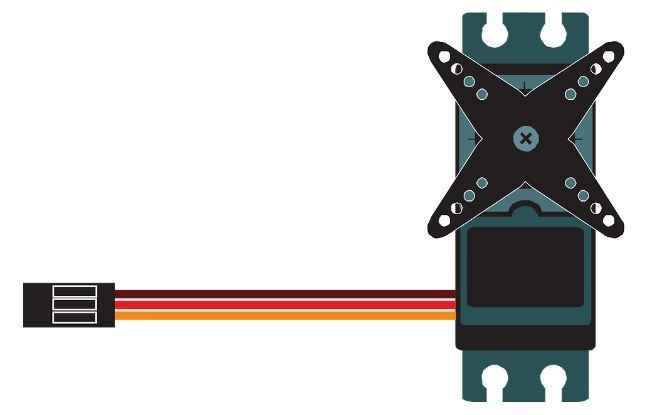
In order for a machine to work properly, it would need specific parts that are designed to give it movement by communicating with other parts to move in a uniform manner. One of those specific parts is the servo motor, which acts as an actuator that controls the angular and linear movements of the machine, as well as its acceleration and velocity. How does the servo motor have this ability? And why is it an integral part of some machines? To know the answers, let us take a look at some details about the servo motor.
Functions of a Servo Motor
The servo motor utilizes position feedback to get instructions on where to move and what to control. The input to the servo motor’s controls comes in the form of an analog or digital signal that communicates with the motor to move to a specific position.
The signal will be received by the encoder that is connected directly to the servo motor. Then, the output shaft would be the part that will be moved by the servo motor to move other parts of the machine. These parts would be one cohesive unit that gives movement to the machine.
Types of Servo Motors
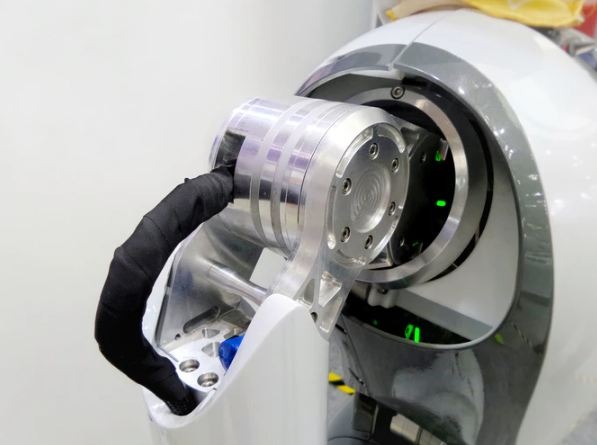
There are various types of servo motors that you need to know about, although they are divided into different categories. These categories are based on the motors’ current type, their design, and their rotating field. To know more, here are details about the categories for the different types of servo motors.
AC and DC Servo Motors
While AC and DC servo motors look similar at first glance, their difference actually lies in how they work. For AC servo motors, their speed is indicated by the frequency of the voltage that is applied to the encoder and the motor itself, while for DC motors, the speed is proportional to the voltage supply, which gives it a more stable but noticeably low output.
However, AC servo motors are more commonly used for bigger machines like 适合夫妻二人看的电影可以下载吗 and automated machinery for manufacturing cars and other types of vehicles, as these motors can withstand high electrical currents.
Brushed and Brushless Servo Motors
Servo motors with brushes are usually cheaper than brushless motors. In addition, they also have a much simpler operation and mechanism, so they are basically easier to use. However, brushless servo motors are generally quieter and are much more durable.
Because of the durability and almost noiseless design of brushless motors, they are the most commonly used by manufacturers. But, those that wanted to cut costs for machines while still having simple and reliable parts would use brushed motors. AC servo motors that you can purchase are all brushless, while DC motors would either be brushless or brushed, depending on the price point.
Synchronous and Asynchronous Servo Motors
Although the choice between brushed and brushless can only be found in DC servo motors, the type of rotating field can only be chosen in AC servo motors. DC motors have a rotating field that is based on the voltage applied, so it doesn’t really have a set rotating field, whereas AC servo motors can have different rotating fields based on their construction.
Synchronous servo motors have a rotor (the inner part of the motor) that moves at an equal speed as the magnetic field found within the stator (the outer part of the motor). On the other hand, asynchronous servo motors have a rotor that moves much slower than the stator’s magnetic field. But, the rotor of asynchronous servo motors can increase in speed if it is amplified by multiple poles or a change in frequency.
Those are just the basic functions and the different types of servo motors to know about if you plan to build your own 69xxxx or if you just want to find out what type of servo motor is found in the machines you use at home or at the office. Knowing which type of servo motor to install is essential to make the parts of a 69xxxx or a machine work properly.